The Genius of Albert Einstein: How One Man Redefined the Universe
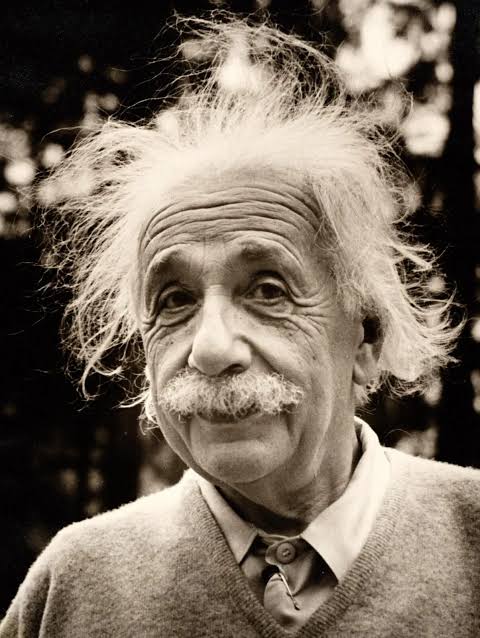
When we hear the word "genius," one iconic image immediately springs to mind: wild white hair, a thoughtful expression, and an unmatched passion for curiosity. Albert Einstein was far more than a brilliant scientist; he became a global symbol of human intellect, creativity, and unconventional thinking.
His groundbreaking ideas reshaped how we understand space, time, gravity, and the fundamental laws of nature.
Early Life and an Unconventional Mind
Born in Ulm, Germany, in 1879, Einstein was not the typical child prodigy often depicted in popular stories. As a young student, he struggled with the rigid, mechanical teaching styles of traditional classrooms. Instead of memorizing formulas without context, he preferred asking deep, conceptual questions about how the world worked around him.
His journey to scientific breakthroughs was not immediate. While working as a modest clerk in a Swiss patent office in Bern, he spent his free time pondering complex physics questions. That quiet routine became the launchpad for a revolution in modern science.
1905: The Miracle Year
In 1905, often called his annus mirabilis (miracle year), Einstein published four revolutionary papers in physics. In these short essays, he presented ideas that changed scientific thought forever:
-
The Photoelectric Effect: Demonstrated that light acts as both waves and particles (photons), a discovery that earned him the Nobel Prize in Physics in 1921.
-
Special Relativity: Proposed that space and time are interconnected rather than fixed separate entities.
-
Mass-Energy Equivalence: Gave birth to history's most celebrated equation:
E = mc^2
This simple formula showed that mass can convert into energy and vice versa, laying the theoretical foundation for nuclear energy and astrophysics.
Bending Space and Time
A decade later, in 1915, Einstein completed his masterwork: the General Theory of Relativity. He suggested that gravity is not an invisible pulling force, but rather the bending or warping of space and time caused by massive cosmic bodies like stars and planets.
His predictions were later verified during a total solar eclipse in 1919, turning Einstein into an international sensation overnight.
A Lasting Legacy for Humanity
Einstein's influence extends far beyond textbooks and lecture halls. Technologies we rely on daily, such as GPS navigation, satellite communications, and laser applications, depend directly on principles derived from his research.
Beyond equations, Einstein was a firm believer in the power of imagination and free thought. He famously noted that true intelligence comes not just from stored knowledge, but from the willingness to wonder and ask bold questions.
His life reminds us that true progress happens when we look beyond conventional wisdom and dare to explore the unknown.